Yellow Dye Reveals Tiny Eye Paper Cuts — And It’s Kind of Amazing (and Gross)
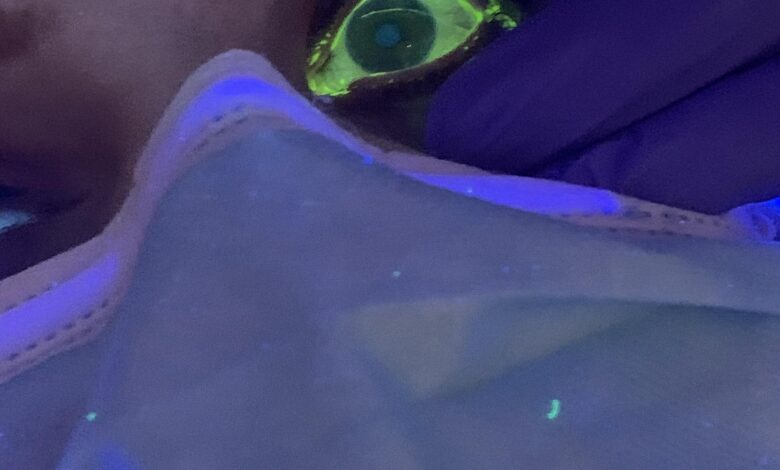
A drop of dye, a flick of blue light — and you can see a paper cut on your eyeball. Here’s how it works.
Okay, prepare to feel a little uneasy.
Someone got a tiny paper cut on their eyeball. You know, the cornea took a direct hit. Ouch. But that’s not even the wild part.
The crazier part? A single drop of yellow fluorescein dye — plus a cobalt blue light — lit up the cut like a neon sign under a blacklight. Suddenly, that invisible injury was visible, vibrant, and impossible to ignore. (Reddit, Reddit, Reddit)
What’s fluorescein—even?
Fluorescein is a fluorescent dye that doctors use to scrutinize the surface of your eye. It’s a small molecule that’s yellow-orange in normal light — but under blue light, it glows bright green. (www.slideshare.net)
It’s neither harmful nor invasive. You can get it via an eyedrop or a little paper strip. Blink a few times, and where your corneal surface is damaged, the dye settles in and sticks. That’s because injured areas soak up dye more than intact tissue. Then, the blue light turns those injuries into glowing green.
Doctors use it to find:
- Corneal abrasions (like paper cuts or grass scratches)
- Foreign bodies (like that rogue eyelash)
- Ulcers or other epithelial damage
- Tear-film issues, like in dry-eye tests (Medical News Today, Eyes On Eyecare, Healthline, morancore.utah.edu)
It’s standard procedure — and, yes, it can sting a little. But it’s fast, inexpensive, and often a one-stop solution.
How it’s done (in real life)
Here’s the typical scene:
- You sit down. Doctor touches anesthetic or saline-dipped strip to your eye.
- You blink — dye spreads across your cornea and conjunctiva.
- Doctor uses a slit lamp or ophthalmoscope with a cobalt-blue filter.
- Any abrasion lights up bright green — like a mini warning beacon.
- They measure it, document it, treat it (usually with antibiotic drops and a protective patch). (Healthline)
If it’s a paper-cut-level injury, you’ll walk out with drops and instructions to avoid rubbing your eye. Most heal well within a few days — but they hurt like hell in the meantime, as many Reddit users shared. (Reddit)
Why this matters (beyond “gross but cool”)
- Faster, safer diagnosis: Instead of guessing at a bug bite or irritation, doctors see the problem instantly.
- Precision care: They can treat based on stage and depth of injury — not just symptoms.
- Accessible tool: Fluorescein strips are cheap and portable — used in rural clinics, ERs, and sports fields.
- Prevents complications: Quick detection reduces the risk of infection or permanent scar tissue.
It’s a tiny chemical, but it helps catch problems before they escalate — and that’s a big deal for eye health. (PMC)
A few things to keep in mind
- Sensation: You might feel a mild stinging or taste the dye in your throat briefly.
- Vision blur: Expect blurry or colored vision for a few minutes.
- Allergies: Rarely, people can have allergic reactions — so doctors watch for that. (glasses.com)
- Eye protection: Don’t rub or wear contacts until it’s healed — even a small abrasion puts you at risk.
My take
The fluorescein stain is one of those clever medical tools that feels almost magical. A spot of dye plus blue light = tiny injuries made visible. It’s simple, smart, and critical.
But there’s something deeply human about it, too: hearing someone describe their pain, sharing photos, and realizing even our eyes aren’t safe from everyday accidents. This little test connects science to the lived experience — and turns “invisible hurts” into visible ones.
So next time you’re sitting in a dim clinic room under that eerie blue glow, know it’s there to protect your vision — and yes, it’s utterly fascinating.