
Uranus Is Surprisingly Warm—And Scientists Say We’ve Been Underestimating It
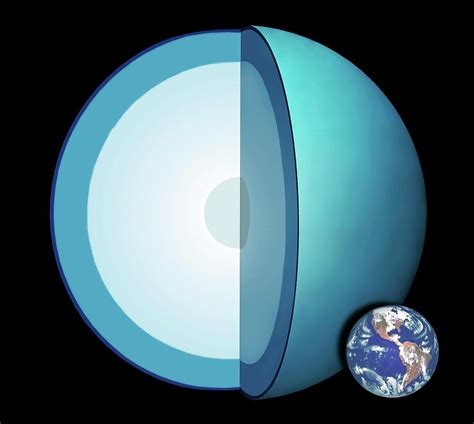
The chilly ice giant is actually leaking internal heat—by about 12.5% more than it receives from the Sun. Here’s why that matters.
For decades, Uranus has puzzled planetary scientists. Cold, distant, and tilted on its side like a cosmic prank, this icy giant was long thought to be dormant—especially when it came to internal heat.
In 1986, NASA’s Voyager 2 made a historic flyby and left scientists scratching their heads. Unlike Jupiter, Saturn, or even Neptune, Uranus seemed to radiate no detectable internal heat. The data appeared to confirm that Uranus was simply frigid and inert—a strange outlier among gas giants.
But now, nearly 40 years later, a new study has upended that assumption. Researchers have combined decades of planetary observations, improved climate models, and fresh interpretations of data—and the results are in:
Uranus does emit internal heat—about 12.5% more energy than it receives from the Sun.
That may not sound like much, but in planetary science, it’s huge.
How Scientists Figured This Out
The key to solving the mystery was revisiting and recalibrating older datasets. Researchers compiled:
- Voyager 2 infrared readings
- Ground-based telescope observations
- Space telescope imaging, including data from the Spitzer and Herschel observatories
- Updated planetary models that factor in Uranus’s unique axial tilt and orbital dynamics
What they found was eye-opening: Voyager likely caught Uranus during an unusual solar event—a kind of false reading. Over its long 84-year orbit, Uranus experiences extreme seasons due to its 98-degree tilt. That tilt likely skewed early measurements.
Now, with an orbital-average model, it’s clear Uranus is not heat-dead. It’s just extremely subtle.
The Numbers: Cold But Not Quiet
Let’s put Uranus in context:
- Uranus emits ~112.5% of the energy it absorbs from the Sun
- That’s modest compared to:
- Jupiter (~200%)
- Saturn (~180%)
- Neptune (~260%)
- But it breaks the long-standing belief that Uranus was “thermally inert”
In short: Uranus is still releasing primordial heat from its formation—just more quietly than its cosmic siblings.
Why This Changes Everything
1. Mystery solved
Scientists have debated Uranus’s “missing heat” for decades. This study shows it was never missing—just hidden behind flawed timing and seasonal effects.
2. A deeper understanding of planetary interiors
The way Uranus emits heat suggests it may have layered convection, ice-rich interiors, or barriers to heat flow—complex physics worth exploring.
3. New urgency for a Uranus mission
Calls for a dedicated Uranus orbiter have intensified. With this heat signature, missions could now study:
- Interior structures
- Seasonal atmospheric changes
- Magnetic fields and auroras
NASA and ESA are already in discussions for a 2030s launch window.
4. Implications for Earth and exoplanets
Studying Uranus’s heat balance helps refine climate and radiative models—tools used in Earth science and exoplanet research. Understanding how a planet retains or emits energy is essential to modeling habitability.
The Internet Reacts
Of course, Reddit had its fun. Comments like:
“So you’re telling me Uranus is hotter than we thought?”
“I always knew Uranus had a fiery side.”
But beyond the jokes, many space enthusiasts welcomed the clarification. Uranus went from cold oddity to misunderstood heat-holder overnight.
My Take
This is more than just a quirky planetary update—it’s a lesson in scientific patience.
Voyager gave us a moment in time. It took 40 years of better tools, better data, and big-picture thinking to correct the story.
Now we know: Uranus is alive, still glowing faintly from within. That revelation reshapes how we understand the formation of not just Uranus, but gas giants everywhere—even those orbiting distant stars.
This isn’t flashy heat. It’s subtle, slow-burning, and scientifically powerful.